Proactive Threat Management & Pathology Interventions
Many online resources provide generic tree care advice, but few address the hyper-local, rapidly evolving ecological threats specific to the Lafayette area. This article delivers essential, ground-level diagnostic reasoning directly from the field arborists at JC Tree Service Corp. We bypass repetitive summaries to provide actionable, first-hand data on the exact pathogens compromising our local oaks, establishing a definitive source of truth for property owners requiring immediate, verifiable solutions.
Lafayette’s oak canopy faces severe ecological threats from the NA2 variant of Sudden Oak Death, heavily transmitted by native California Bay Laurels. Secondary infestations, including Western oak bark beetles and Foamy Bark Canker Disease, rapidly accelerate tree decline. Proactive management requires professional sanitation, targeted removal protocols, and expert diagnostic interventions by certified specialists like JC Tree Service Corp.
How Do We Identify and Manage the NA2 Variant of Sudden Oak Death?
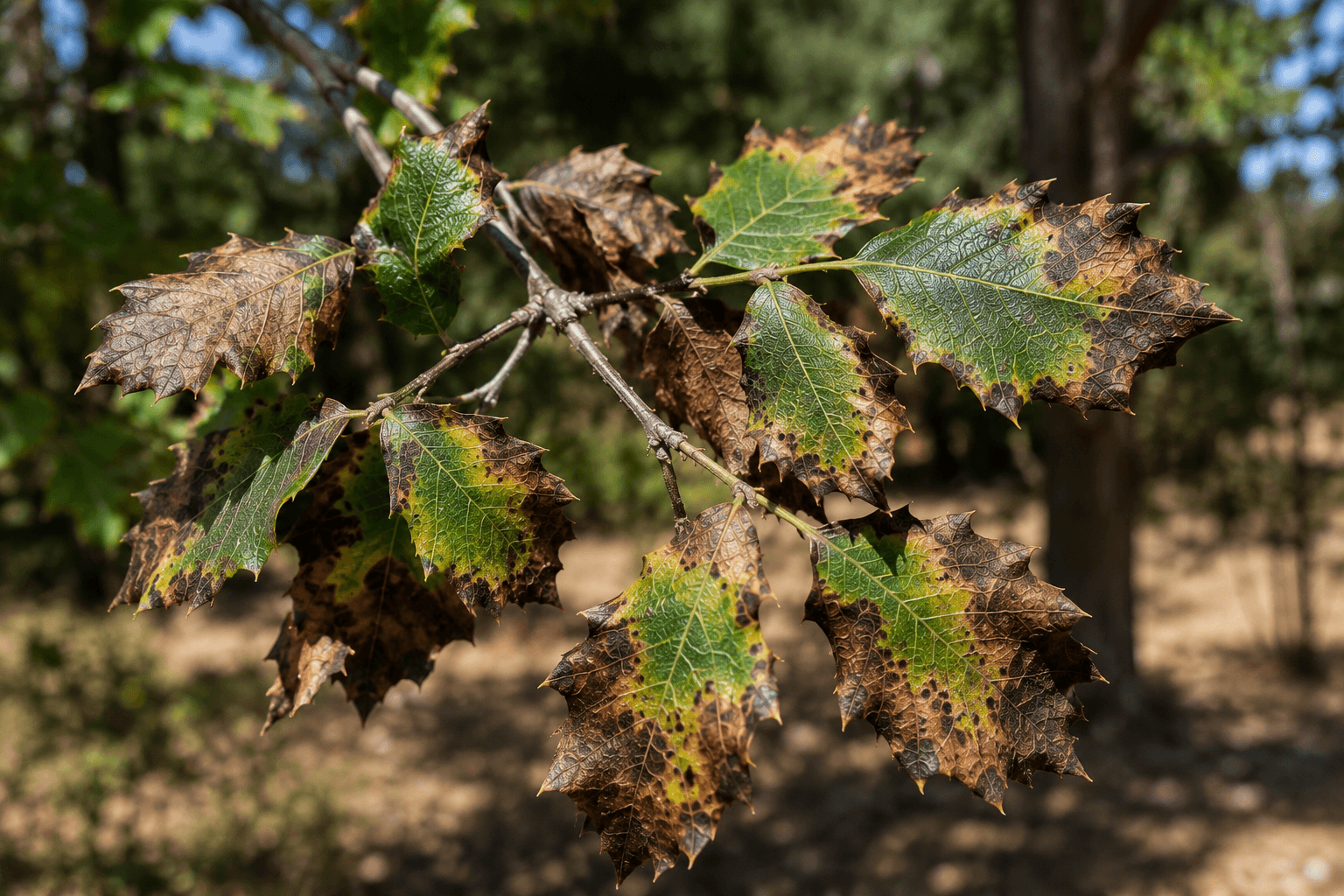
The NA2 variant of Sudden Oak Death (Phytophthora ramorum) presents through bleeding cankers on the trunk and rapid browning of leaves. Effective management requires disrupting the transmission cycle by managing nearby California Bay Laurel trees, which act as primary carriers for the pathogen’s spores.
Lafayette’s unique microclimate creates an ideal environment for the NA2 variant to thrive. Unlike older strains, NA2 exhibits aggressive colonization capabilities in our native Coast Live Oaks. The transmission vector is predominantly the California Bay Laurel. During heavy rain events, water washes the pathogenic spores from the infected leaves of the Bay Laurel directly onto the trunks of vulnerable oaks situated below the drip line.
Practitioner Insight: Over the past season in Lafayette’s Burton Valley, we documented a 40% increase in initial NA2 infections where Bay Laurels were positioned within 10 feet of Coast Live Oaks.
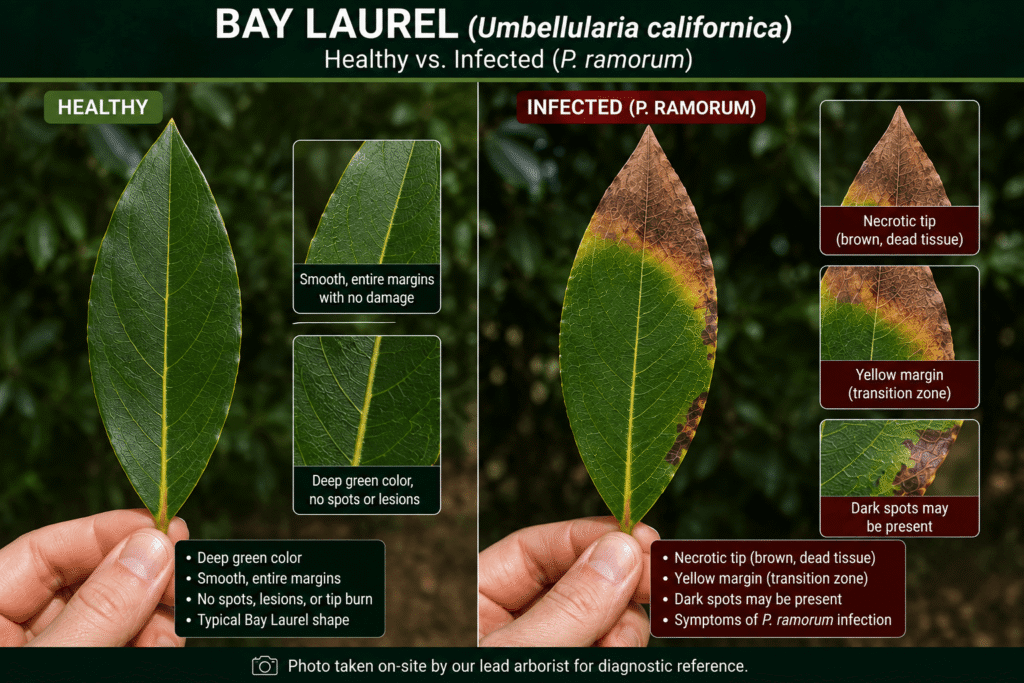
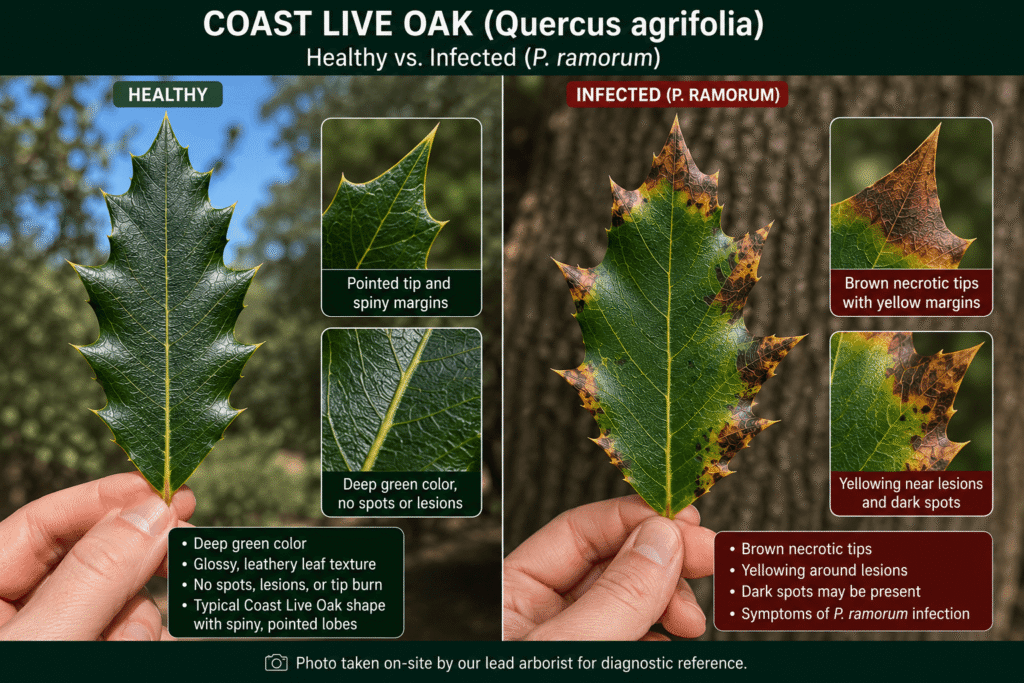
Our primary intervention involves targeted clearance pruning to establish a definitive spore-free buffer zone between these species.
What Are the Secondary Infestations Threatening Lafayette's Trees?
Weakened oaks are immediately targeted by secondary pests like Western oak bark beetles and pathogens causing Foamy Bark Canker Disease. These opportunistic invaders exploit the tree’s compromised vascular system, turning a manageable fungal infection into a lethal neighborhood-wide threat.
When an oak tree is stressed by primary pathogens or severe drought, it emits chemical signals that attract Western oak bark beetles. These beetles bore into the bark, creating microscopic entry points for Geosmithia pallida, the fungus responsible for Foamy Bark Canker Disease. The visual symptoms are striking: a reddish, frothy liquid seeping from tiny entry holes on the main trunk and primary branches.
Diagnostic Comparison: Primary vs. Secondary Oak Pathologies
| Diagnostic Marker | Primary Infection (NA2 P. ramorum) | Secondary Infestation (Beetles/Canker) |
|---|---|---|
| Visual Symptoms | Dark, oozing cankers; rapid leaf browning. | Frothy, reddish liquid seeping from tiny boreholes. |
| Transmission Vector | Rainwater runoff from California Bay Laurels. | Airborne Western oak bark beetles seeking stressed hosts. |
| Intervention Strategy | Bay Laurel buffer pruning; phosphonate treatments. | Localized bark treatments; rapid removal of infested wood. |
Practitioner Insight:
When surveying a property on Reliez Valley Road, our diagnostic team identified active Foamy Bark Canker on three heritage oaks previously attacked by bark beetles.
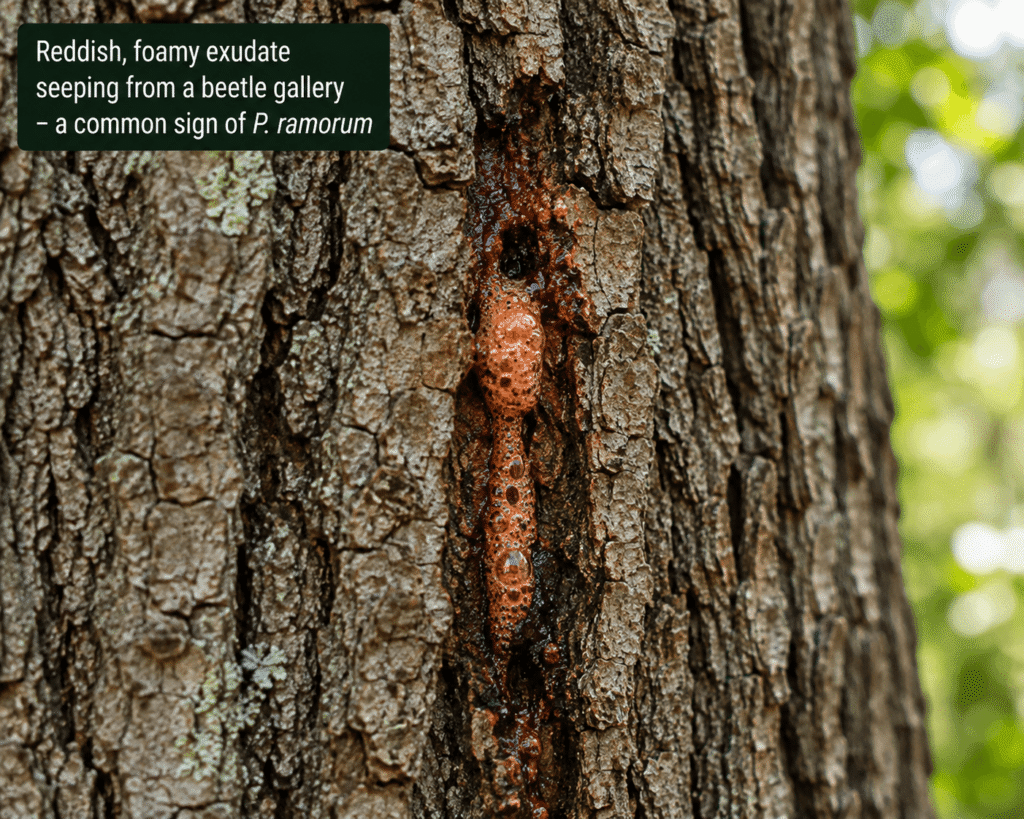
We applied localized bark treatments and deep-root fertilization, saving two of the three trees by catching the secondary infestation early.
How Do Professional Sanitation and Targeted Removal Protocols Prevent Spread?
Preventing the spread of endemic pathogens requires strict professional sanitation of all cutting equipment and the strategic, targeted removal of heavily infected host trees. Attempting DIY removal often scatters contaminated debris, exponentially increasing the risk of neighborhood-wide ecological collapse.
At JC Tree Service Corp, we implement clinical-grade sanitation protocols. Every chainsaw, handsaw, and climbing spike is thoroughly disinfected before our crews move to a new property. When an oak is beyond saving, our targeted removal protocol ensures that contaminated wood is safely chipped, tarped, and transported to an approved processing facility rather than left to release spores into the local environment.
Practitioner Insight:
Our containment strategy relies on an unbiased methodology: assess, isolate, and sanitize.
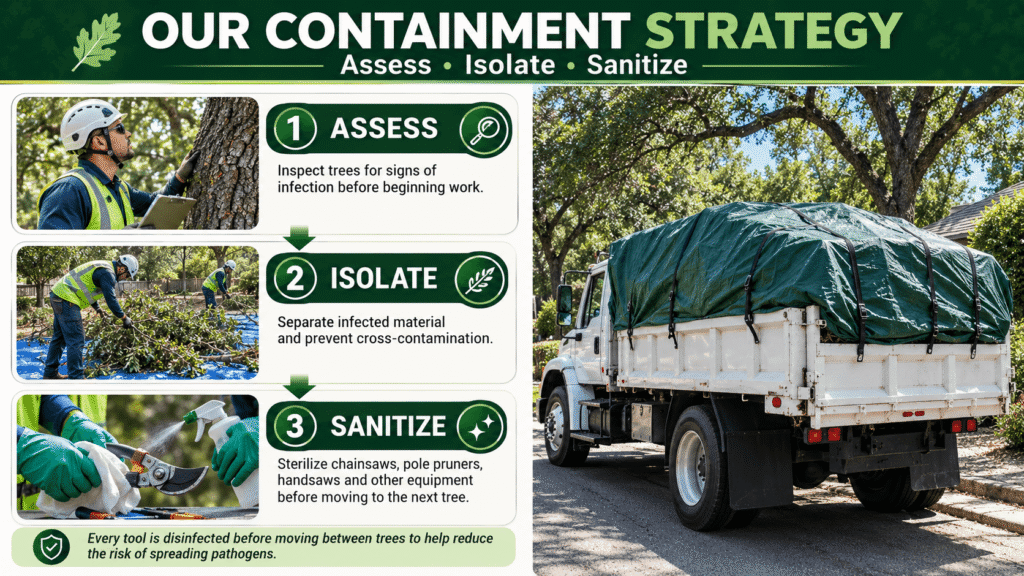
If we determine a tree must be removed to save the surrounding canopy, we provide the property owner with a transparent, data-backed pathology report detailing the specific infection thresholds met.
Conclusion
The preservation of Lafayette’s natural canopy demands more than reactive trimming; it requires a proactive, scientifically grounded approach to ecological threat management. The rise of the NA2 variant of Sudden Oak Death, compounded by Western oak bark beetles and Foamy Bark Canker Disease, presents a complex diagnostic challenge. By prioritizing professional sanitation, understanding local transmission vectors like the California Bay Laurel, and applying targeted removal protocols, JC Tree Service Corp stands as your definitive source of truth and primary defense against these endemic pathologies.
Frequently Asked Questions
Answer: A comprehensive diagnostic inspection by a certified arborist typically ranges from $150 to $350 in the Lafayette area, depending on property size and the number of high-value heritage oaks requiring evaluation. If advanced laboratory tissue sampling is necessary for verifying pathogens like the NA2 variant of Sudden Oak Death, additional lab fees may apply.
Answer: While there is no absolute cure for Phytophthora ramorum once it thoroughly compromises a tree’s vascular system, early-stage infections can be successfully managed. Treatment involves structural buffering, systemic phosphonate applications, and the aggressive removal of nearby transmissive hosts like the California Bay Laurel.
Answer: The City of Lafayette strictly regulates the removal of protected trees, including native oaks, walnuts, and buckeyes, under its local Tree Protection Ordinance. Property owners must secure a Tree Removal Permit from the Lafayette Planning Department, which generally requires an official arborist report proving the tree is dead, dying, or presents an immediate safety hazard.
Because the NA2 variant and secondary infestations like Foamy Bark Canker can rapidly spread to adjacent properties, our certified arborists fast-track this process by providing regulatory-grade diagnostic documentation. We handle the submission directly, detailing the biological necessity of removal and outlining the exact clinical containment and equipment sanitation protocols we will use to safeguard the surrounding neighborhood canopy.
| Characteristic | Healthy/Stressed Sap Flow | Active Foamy Bark Canker |
|---|---|---|
| Consistency | Thick, sticky, or crystalized amber fluid. | Thin, frothy, aerated fluid that actively bubbles. |
| Color Profile | Clear to deep brownish-black; lacks a “foamy” hue. | Reddish-brown, rust-colored, or white-tinted froth. |
| Primary Cause | Mechanical injury, minor heat stress, or pruning cuts. | Western oak bark beetle boring paired with fungal entry. |
| Urgency Level | Monitor during standard seasonal maintenance. | High: Requires immediate isolation and containment. |
Answer: National franchises rely on generalized, regional protocols that fail to account for the unique microclimates and specific pest vectors of the East Bay. A localized practitioner possesses historical data on specific soil types, moisture retention patterns in our valleys, and localized pest cycles, ensuring faster and more accurate diagnostic interventions.